
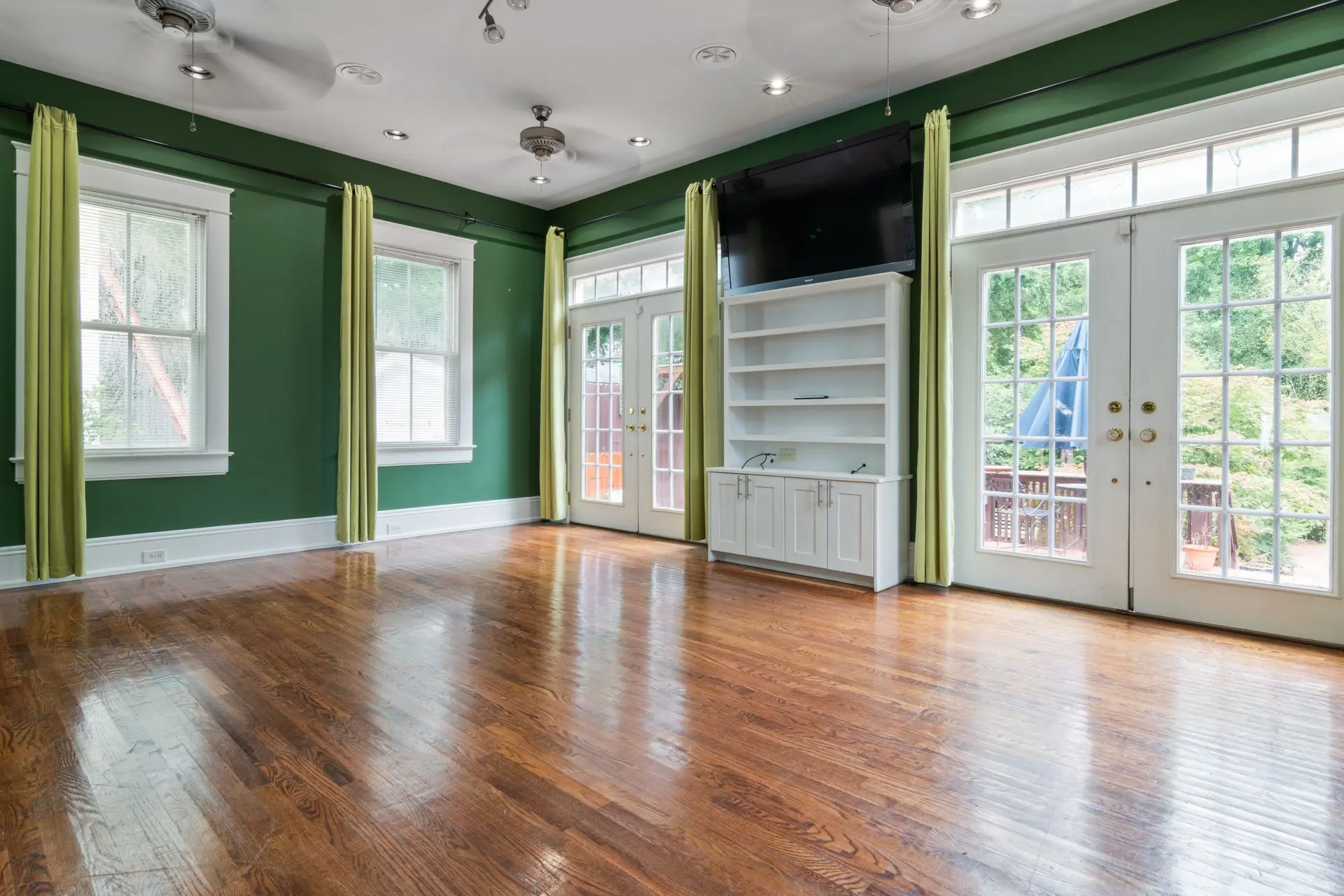
Flooring, Drywall & Interior Finishes in Claremont
Original wood floors refinished, sound plaster kept and new drywall matched to it in Claremont houses, with any leak or damp spot traced and stopped first.
Wood floors and plaster both give way when moisture sits against them, so before an oak floor is sanded or a wall patched, we look for where water is getting in. A slow leak at a toilet base, a crawlspace with no vapor barrier or a downspout emptying against the foundation can each cup boards and loosen plaster. We stop that water first, then refinish the original floors and repair the walls around them.
Original floors under carpet or vinyl
Older houses may have oak, fir or pine hidden under later carpet or sheet vinyl. We lift a corner or a floor register to see the species, the board thickness and how much wood sits above the tongue, since that decides how many more sandings the floor can take. Damaged boards are swapped for matching ones pulled from inside a closet, where the wood has aged the same way, and laced in with staggered ends so they blend into the field. Where new flooring meets old at a doorway, its thickness is chosen to leave no lip.
Plaster that stays, drywall where walls open
Plaster still keyed to its lath is worth keeping: it is hard, it dampens sound and it holds the original wall lines. We tap and press each wall to find where the keys have broken and the plaster has pulled away, then reattach those areas with plaster washers and adhesive before patching. Where a wall has been opened for new wiring or pipes, we hang drywall and finish it to the same texture and plane as the plaster beside it, so the change does not show across the room.
About our Flooring, Drywall & Interior Finishes serviceEverything we do in Claremont
Flooring, Drywall & Interior Finishes in Claremont: common questions
Most solid wood floors can be sanded again if enough wood remains above the tongue, and we check that at a register or threshold before quoting. Engineered boards with a thin top layer may only take a light screen and recoat. Deep pet stains or old water damage may mean replacing a few boards before the finish goes on.
Keep it when it is bonded to the lath, the cracks are fine and the surface feels solid under the hand. Plaster that sags, sounds hollow over a wide area or has to come out anyway for wiring is a better candidate for drywall. A room can end up with both, joined so the seam disappears under paint.
Not until it is tested. Older vinyl tiles, sheet flooring and the black mastic under them can contain asbestos, so a sample goes to a lab before anything is pulled up. If the result comes back positive, a licensed abatement contractor removes it under containment, and our work starts once the area is cleared.
Talk to us about your house in Claremont
Send the details and we will set up a walk-through and a written scope.