
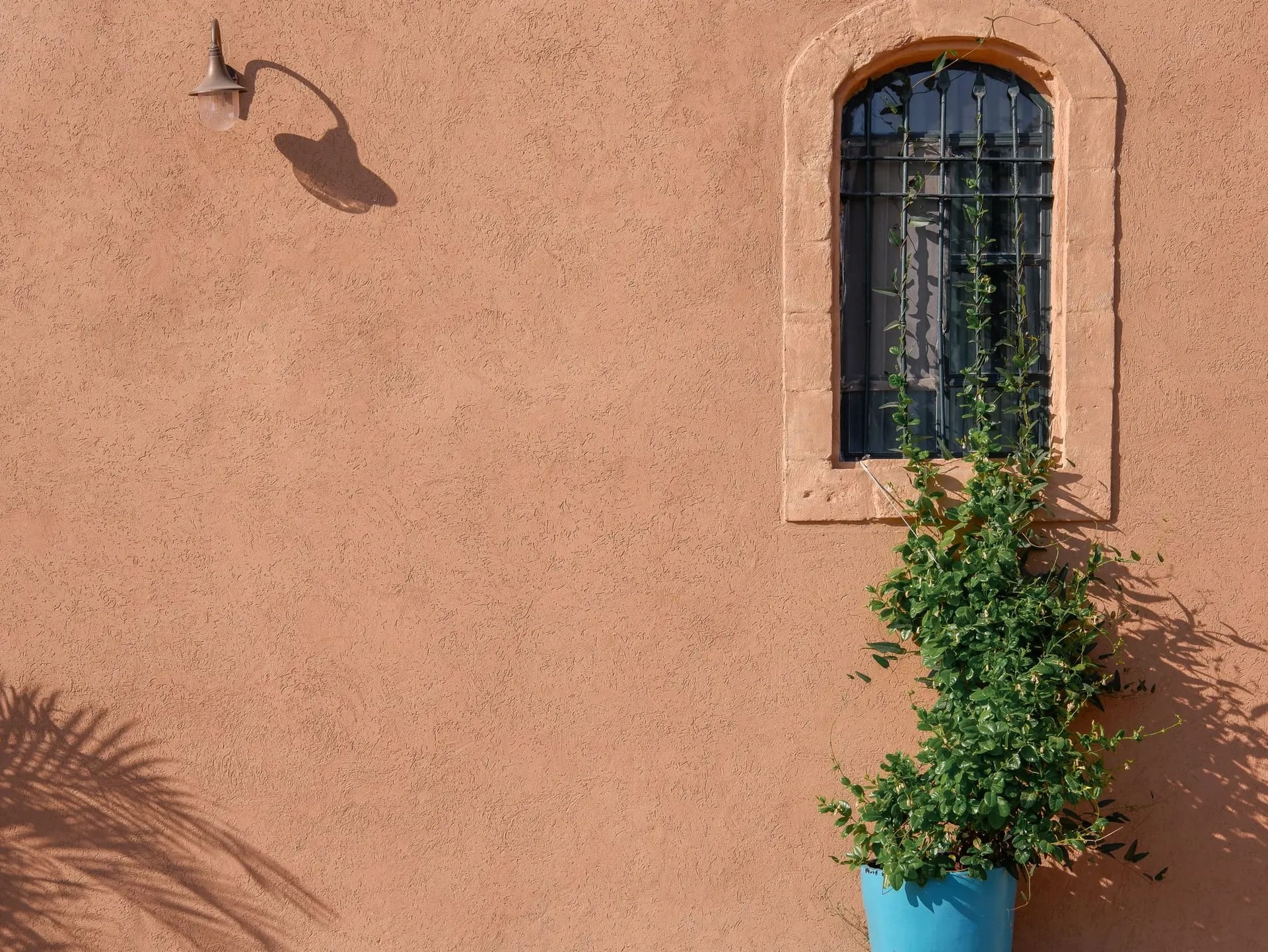
Stucco & Exterior in Woodland Hills
The order of work on older Woodland Hills houses, from irrigation and soil level to flashing and finish, before stucco is patched or recoated.
Sprinkler heads get turned off and the soil is pulled back from the foundation line before anything on a Woodland Hills wall is touched. Water that lands on the same stretch of plaster every morning is often why it cracked and stained in the first place. Fixing the finish without fixing the water just schedules the same repair for later.
Water first, then the wall
With irrigation redirected and soil lowered, a test opening goes in at the worst crack. Paper, sheathing and flashing are checked, and damaged parts are cut out and rebuilt. Window heads get new flashing, and a metal weep screed is installed or cleared at the base. Only then do patch coats go on: scratch coat, brown coat, finish. Each layer is allowed to cure before the next, so the wall does not shrink and split under a thick, wet buildup of plaster.
Texture and trim at the end
Last comes the matching. Trial areas go onto the existing wall, and color and texture are adjusted until a dry patch is hard to find. If the wall has failed in many places, brushing a new color coat over the whole face leaves no seam between old work and new. Trim is repaired where the wood is sound, and any replacement is milled to the old shape. Paint on the trim goes on after the plaster has cured, so the lines stay crisp where wood meets wall.
About our Stucco & Exterior serviceEverything we do in Woodland Hills
Stucco & Exterior in Woodland Hills: common questions
Frequently, with small trial areas. Pattern and color both have to be matched, and plaster looks darker wet than dry, so judging waits until the sample has cured. Where the finish varies widely across a wall, coating the whole face is cleaner than many patches.
Water is usually the story, from a sprinkler that hits the wall, a leaking hose bib or flashing that has failed. A moving frame also splits plaster. Cracks are opened at the worst point to see what is behind them before a repair is chosen.
Boards that are sound stay and get paint. Rotted boards come out, and the new ones are cut to the old shape. Lower courses get pressed first with a screwdriver tip, since moisture collects there and softens the wood well before the surface shows it.
Stucco & Exterior in other cities
Other work we do in Woodland Hills
Talk to us about your house in Woodland Hills
Send the details and we will set up a walk-through and a written scope.