
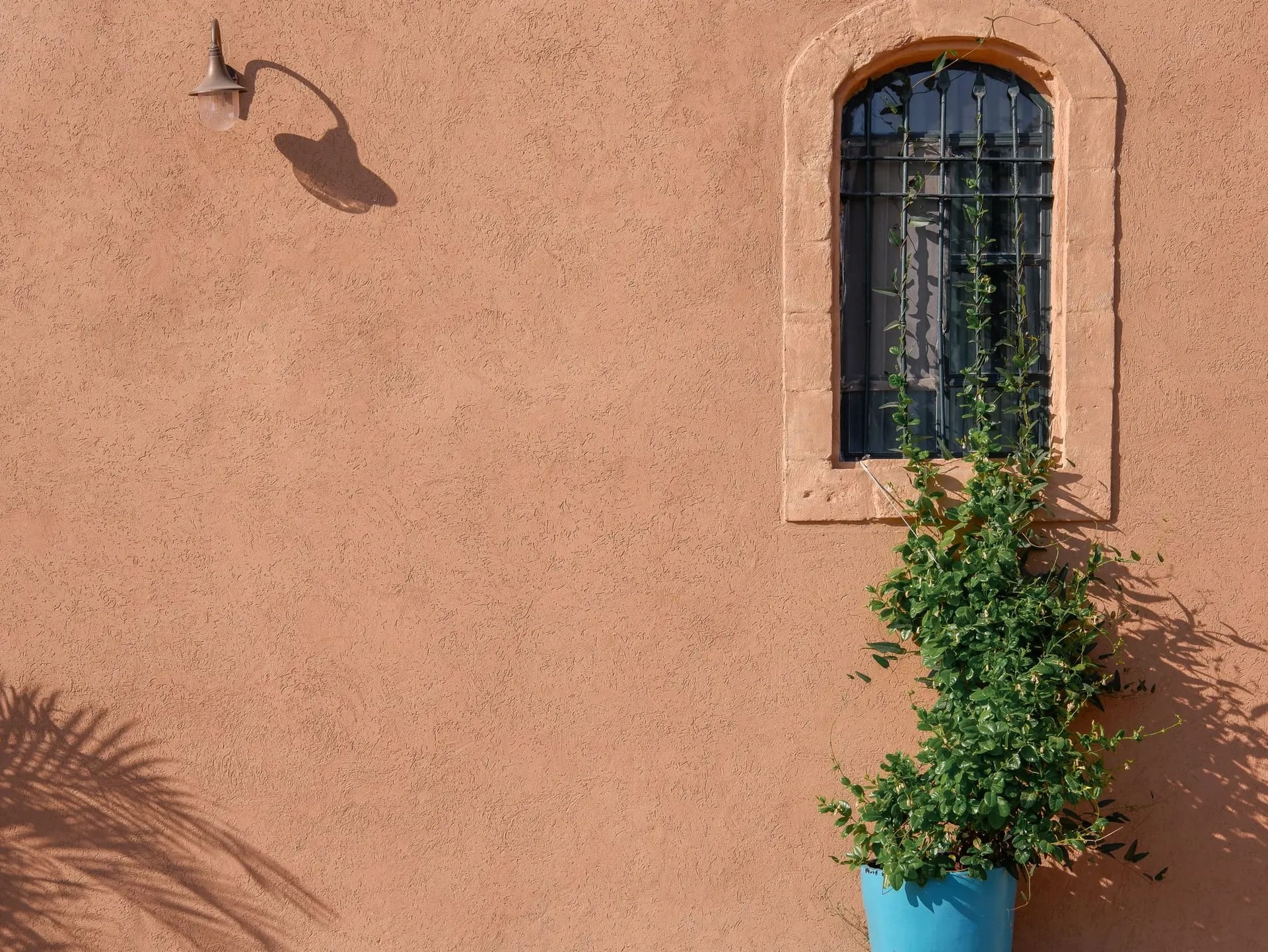
Stucco & Exterior in West Hills
How water is led out of a stucco wall on older West Hills houses: weep screed, flashing and a clear path to the ground, plus matched finishes.
A slotted metal strip along the base of a wall lets water escape from behind stucco. On a West Hills house that weep screed has to stay clear of soil, paving and old paint, or the exit shuts and moisture stays inside the wall. Reading it from outside is the quickest check of whether the wall can drain.
Giving water a way out
Water enters behind stucco at window heads, hose bibs and roof edges, and the wall has to carry it down and out. Flashing at each opening directs it onto the paper, the paper laps shingle-style toward the screed, and the screed lets it drain. Where a screed is buried or painted shut, we cut back the soil or paving and clear the slots. A wall that drains is the foundation of every lasting repair, and it is checked before any patch is mixed or any paint is opened.
Matching the surface
After the drainage path is right, the finish gets its turn. Sample patches dry on the wall until nobody can say where the repair begins. If a large share of the wall has failed, a uniform new coat gives it one appearance. Wood trim is repaired where it is sound, and replacement boards are shaped like the originals, so a repaired window still casts the shadow lines it always did and the house keeps its character, even after the paint has been renewed on every board.
About our Stucco & Exterior serviceEverything we do in West Hills
Stucco & Exterior in West Hills: common questions
In most cases, using trial patches. We study the existing texture, rework a small area a few times and let it dry before judging color. Hard-to-match walls go to a coat across the whole face so no seam is left to show.
A blocked or missing weep screed, failed window flashing or a leaking hose bib puts moisture behind the plaster, where it swells and cracks the finish. A shifting frame can open a crack too. The wall is opened at the problem to reach the cause.
Sound boards are repaired and painted, because a good repair keeps the original lines. Rotted boards are replaced with new ones shaped to match. Boards low on the wall beside a hose bib are probed first, as that is where water sits.
Stucco & Exterior in other cities
Other work we do in West Hills
Talk to us about your house in West Hills
Send the details and we will set up a walk-through and a written scope.